

ÇALCALAR

Food Safety

ÇALCALAR / QUALITY

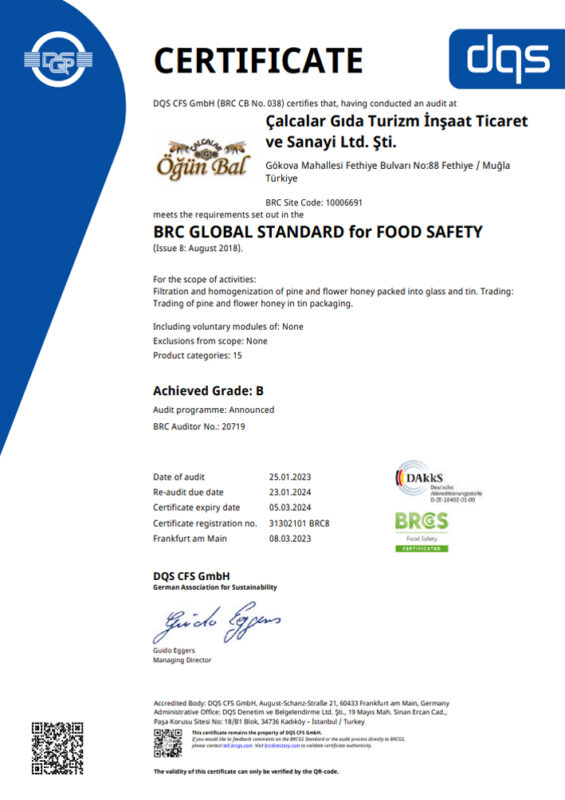
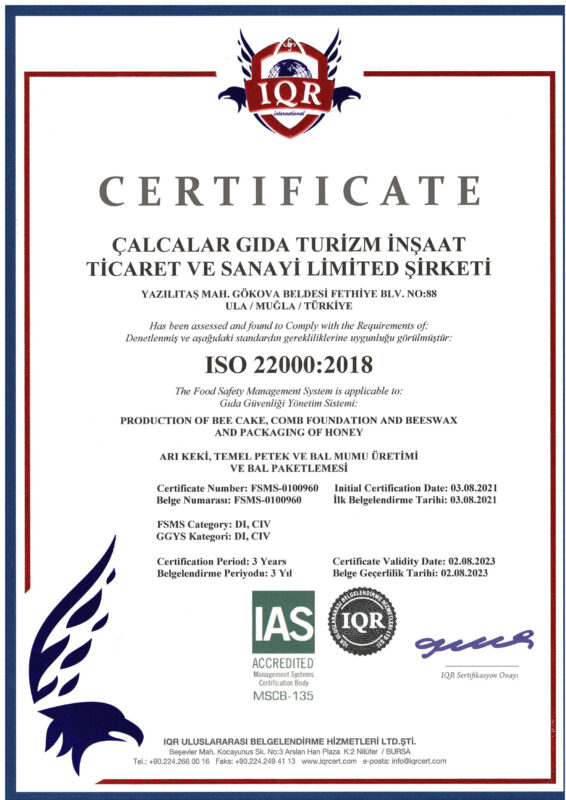
Documented quality

01 / CERTIFICATES

Quality certificates

Quality certificates 1
Quality certificates 2
Quality certificates 3
  1. 02

    Our analyses and their purposes

    Microscopic pollen analysis and sensory testing establish floral origin, varietal purity and whether a honey may be declared as monofloral.

    Physico-chemical analyses examine the authenticity of honey, determining, among other things, the water and enzyme content, the HMF value, the fructose-to-glucose ratio and much more.

    Residue analysis verifies that honey meets strict limits for pesticides and veterinary treatments used in beekeeping.

    Our controls cover both the honey and the reliability of our testing procedures, supported by trained specialists, documented methods and transparent processes. After all, our quality is about your taste. 3Öğün Bal branded honey always has the same high quality and typical exquisite taste. This is because its path to the jar follows a precise plan.

    Thanks to careful selection and thorough checks, 3Öğün Bal ensures that the products supplied fulfil the high quality requirements of the brand. Alongside appearance and taste checks, more than 10,000 individual analyses are completed each year by our laboratory and independent institutes.

    Beekeepers carefully selected by 3Öğün Bal provide natural honey from the best honey sources in Turkey. By following our strict specifications, they supply a diverse range of high-quality Turkish honeys.

    Honey arriving in Gökova first undergoes an initial purity inspection. Every delivery receives a unique warehouse number to ensure complete traceability. Laboratory samples are taken from every container in each delivery. Our detailed analysing procedures are only for bottling the best honey as 3Öğün Bal.

    A trained sensory panel blends approved honey into a bottling batch in such a way that the taste and appearance of our 3Öğün Bal is as consistent as possible from January to December and you can rely on it.

    Every honey contains flower pollen, which bees collect on their bodies while gathering nectar and carry back to the hive. Microscopic pollen analysis identifies the plant species and region represented in each sample. The work requires specialist expertise and advanced laboratory equipment, giving us clear evidence of every honey’s origin.

  2. 03

    Genetically Modified Organisms (GMO) and Honey

    Like all natural products, honey is a reflection of the environment. The bee collects nectar and pollen in its natural environment. Genetically modified organisms (GMO) in plants such as rapeseed, maize, soya beans and cotton are now widely used in many parts of the world as part of what is known as green genetic engineering. Honey itself does not contain GMOs, but the pollen in honey can come from a genetically modified plant. However, the proportion of pollen in honey is very low, below 0.1 per cent.

    Bees fly for food within a radius of about 7 kilometres, sometimes even more. The flight of bees cannot therefore be controlled by beekeepers and it cannot be ruled out that bees will fly to a GM plant and that pollen will be mixed into honey. In addition, pollen can be carried several hundred kilometres by the wind - this is one of the reasons why pollen from a GM plant can be detected in honey. However, these pollen grains are not genetically modified organisms - they are inactive in honey and therefore cannot transfer genetic material.

  3. 04

    Residue tests

    Any honey can only be harvested in an uncontaminated way if the environmental conditions in the harvest area allow it. The bee itself acts as a kind of "biofilter": it is very sensitive to pesticides and other chemicals and therefore often dies before reaching the hive. However, contamination as a result of misuse in a wide variety of fields (agriculture and forestry, fruit growing, private gardens, beekeeping, etc.) cannot be ruled out. The quality control of 3Öğün Bal ensures that contaminated honey is not sold, thanks to the continuous optimisation of the analysis methods and the highest precision in the analysis using the latest equipment.

  4. 05

    Sensory and Organoleptic

    Sensory evaluation—assessing honey with all the senses, is one of the most difficult tasks in honey analysis. Here it is assessed whether a honey meets the requirements placed on it in terms of smell, taste and appearance (e.g. mild, spicy, flavour or odours of a particular honey plant). To fulfil this task, the sensory expert needs years of experience in honey, continuous training and highly sensitive senses. Since the flavours of honey change again and again and honey always has a different composition, there are practically no comparison samples that can be archived in the long term. Nuances can only be stored in memory.